Jujube Tea
This tea is a personal favorite of mine, and a gem from Traditional Chinese Medicine (TCM).
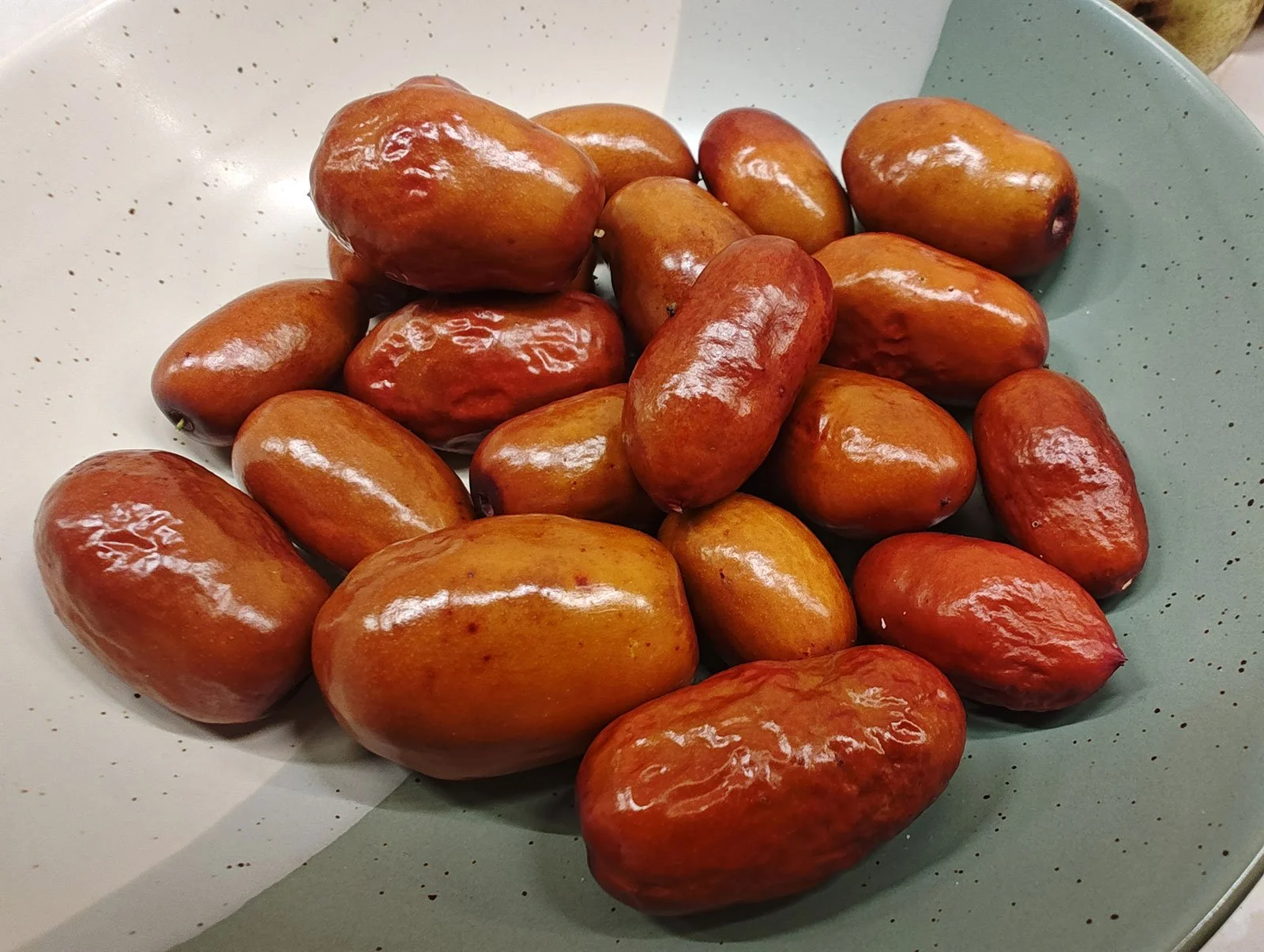
Jujubes are a functional food that supports digestion, vitality, emotional balance, and nervous system resilience.
After the last of the paw paws have finished falling in October, jujube season begins. The jujube tree (Ziziphus jujuba) is an attractive specimen in edible forest gardens and permaculture settings. For my first few years working with it, I simply enjoyed the fruit fresh, until I found how drying improves the flavor, prolongs the shelf life, and lends itself to a deliciously nourishing beverage.
The following tea can be made with fresh jujubes, but it has a more developed flavor when using dried jujubes.
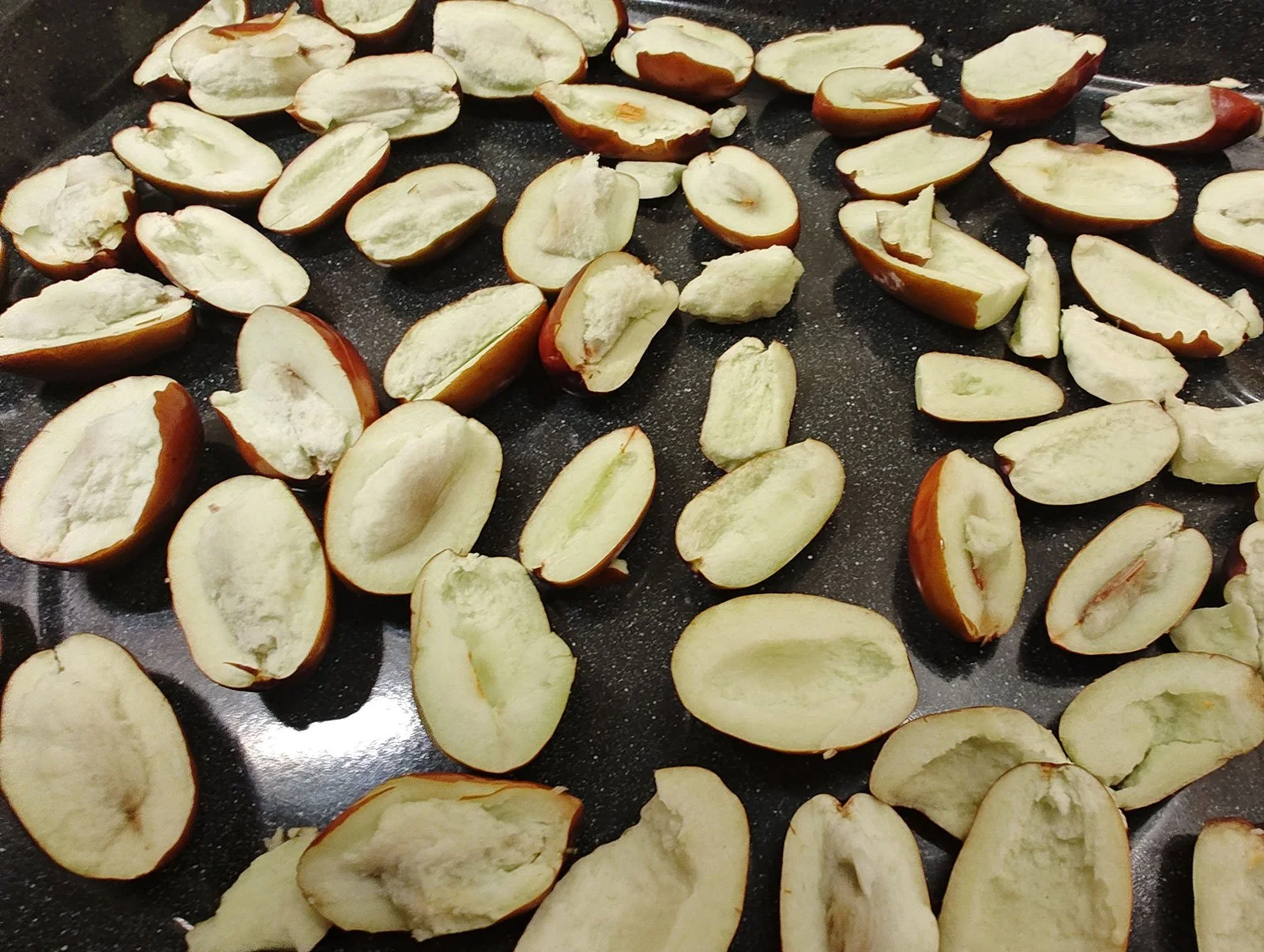
Halved jujubes can be made into tea or dried for later use in tea and culinary applications.
Ingredients
10–12 dried jujube fruit (Ziziphus jujuba), halved
3–4 slices fresh ginger root
1 small cinnamon stick
5–6 cups filtered water
Preparation
Halve the jujubes to expose the nourishing flesh.
Combine jujubes, ginger, cinnamon, and water in an enamel or stainless steel pot.
Bring to a boil, then reduce to a gentle simmer for 45-60 minutes. The liquid will turn a rich amber, and the jujubes will become soft and plump.
Strain the tea into cups and serve warm.
For extra nourishment, enjoy the softened jujube fruit as part of your tonic. Do not eat the pit.
Tip: This decoction keeps in the refrigerator for up to 2 days. Gently reheat before drinking.
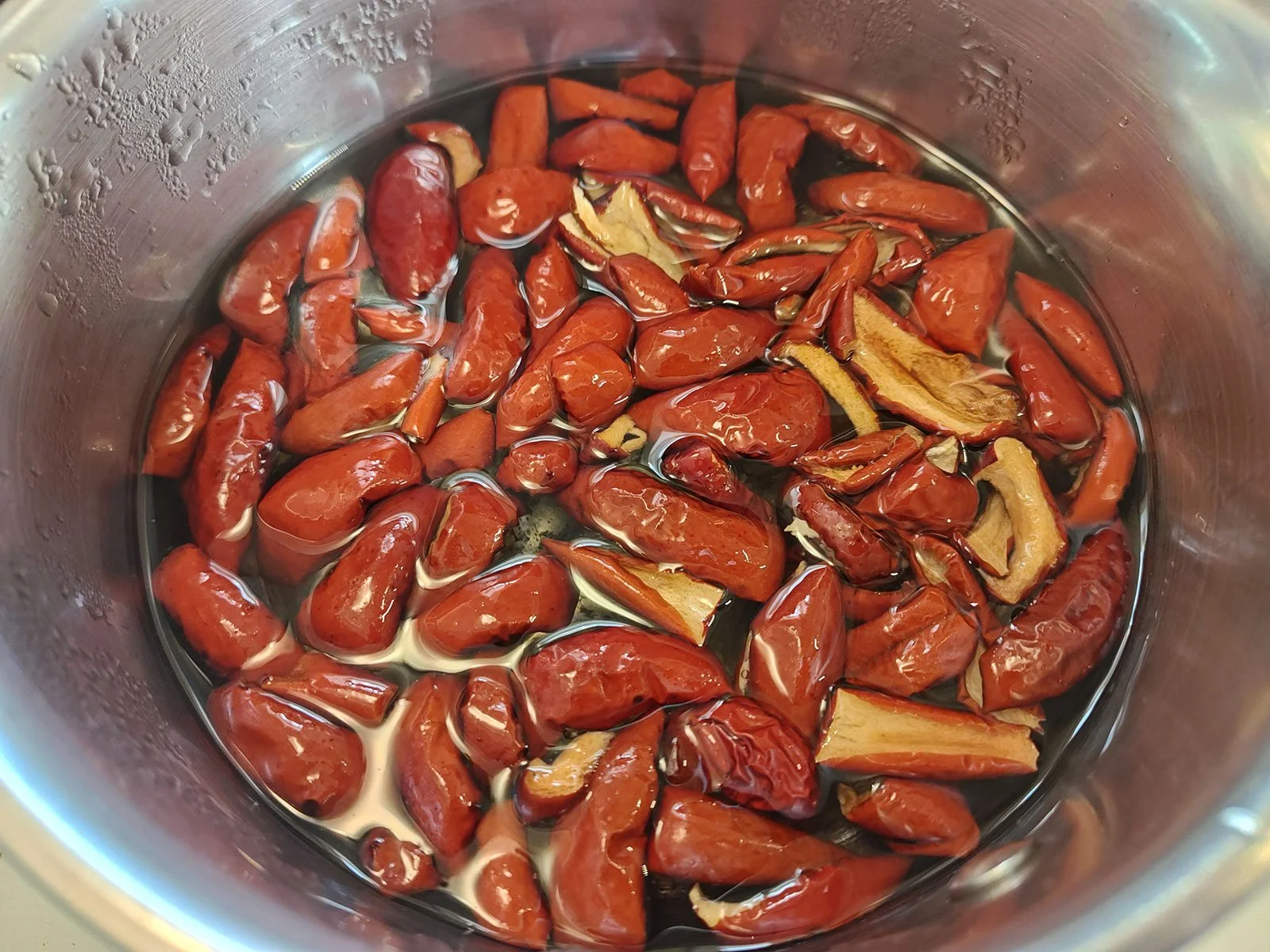
Jujubes are simmered for about an hour to make a delicious and deeply nourishing tea.
Traditional and Functional Benefits
Blood nourishment & vitality: Jujubes are a classic tonic in Chinese medicine to nourish and enrich the blood, improve circulation, and help combat fatigue.
Supports emotional balance: Compounds in the fruit help promote relaxation, resilience, and restful sleep.
Digestive support: Soluble fiber and polysaccharides help nourish the gut.
Immune & antioxidant support: Vitamin C and flavonoids help protect cells.
Hepatoprotective and neuroprotective support: Jujube helps the liver and nervous system.
Mineral nourishment: Potassium, phosphorus, calcium, iron, magnesium, and trace minerals support heart health, muscle function, and cellular function.
Gentle, food-as-medicine quality: Neutral, non-stimulant. Safe for daily use.
Key Notes from Tradition
Halving whole jujubes before simmering enhances both flavor and polysaccharide extraction.
A longer simmer (45-60 minutes) produces a deeply nourishing tea; a shorter 10-minute brew is lighter and perfect for everyday enjoyment.
Cinnamon and ginger can be added for warmth and digestive support; no sweeteners are necessary.
Drying Fresh Jujubes
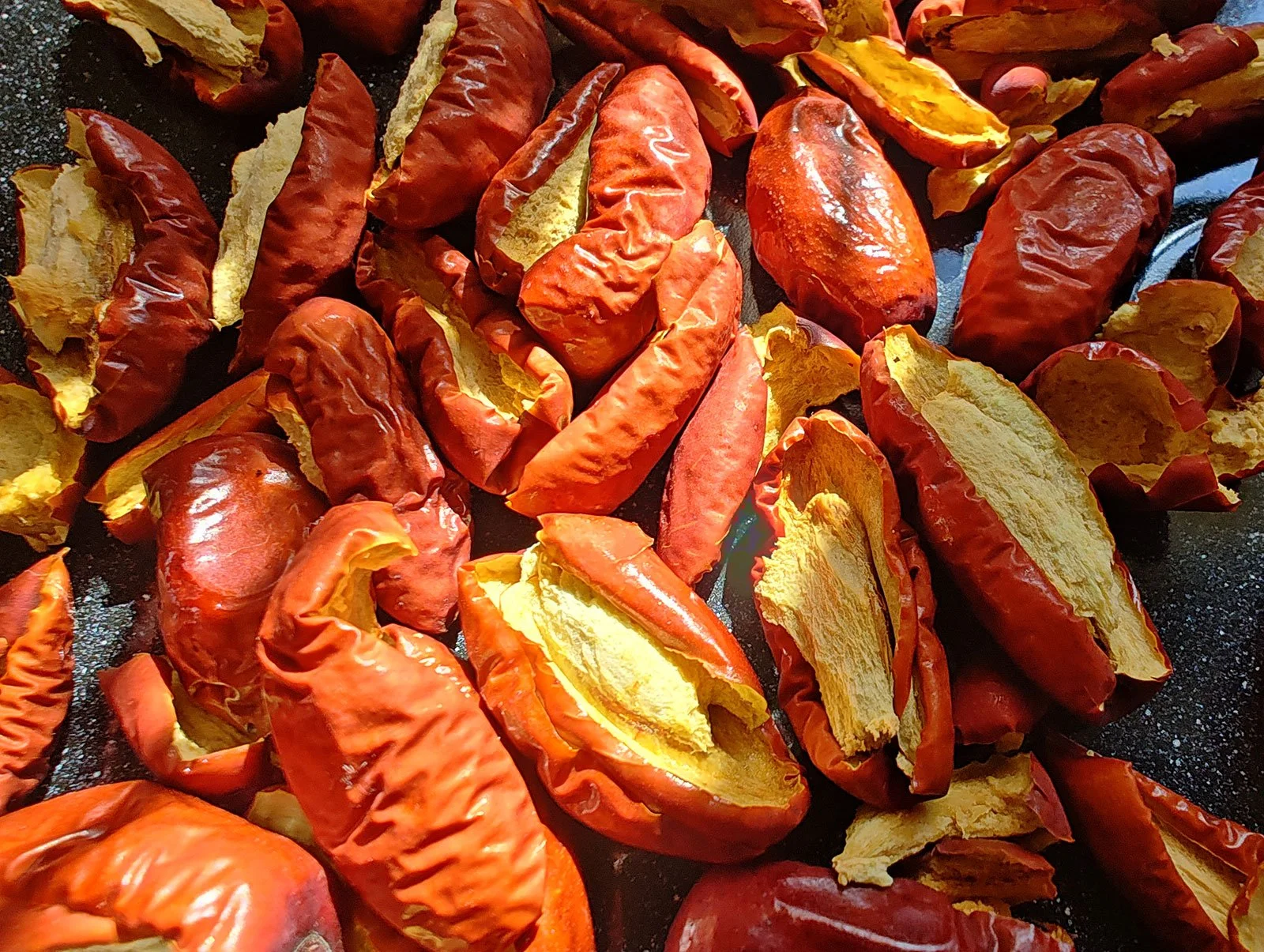
Jujubes dried with their pits on low heat in an oven.
Drying jujubes concentrates their sweetness and preserves them for months. I’ll use dried jujubes in teas, savory dishes, or blended into energy balls for a sweet, mineral-rich boost.
Selecting & Preparing the Fruit
Choose fully ripe, unblemished jujubes. Avoid bruised or overly soft fruit.
Rinse with water and pat dry.
Optional but recommended: halve or score the fruit to speed drying. I fully remove the pits from jujubes for a quicker drying time and less hassle to de-pit later.
Drying Methods
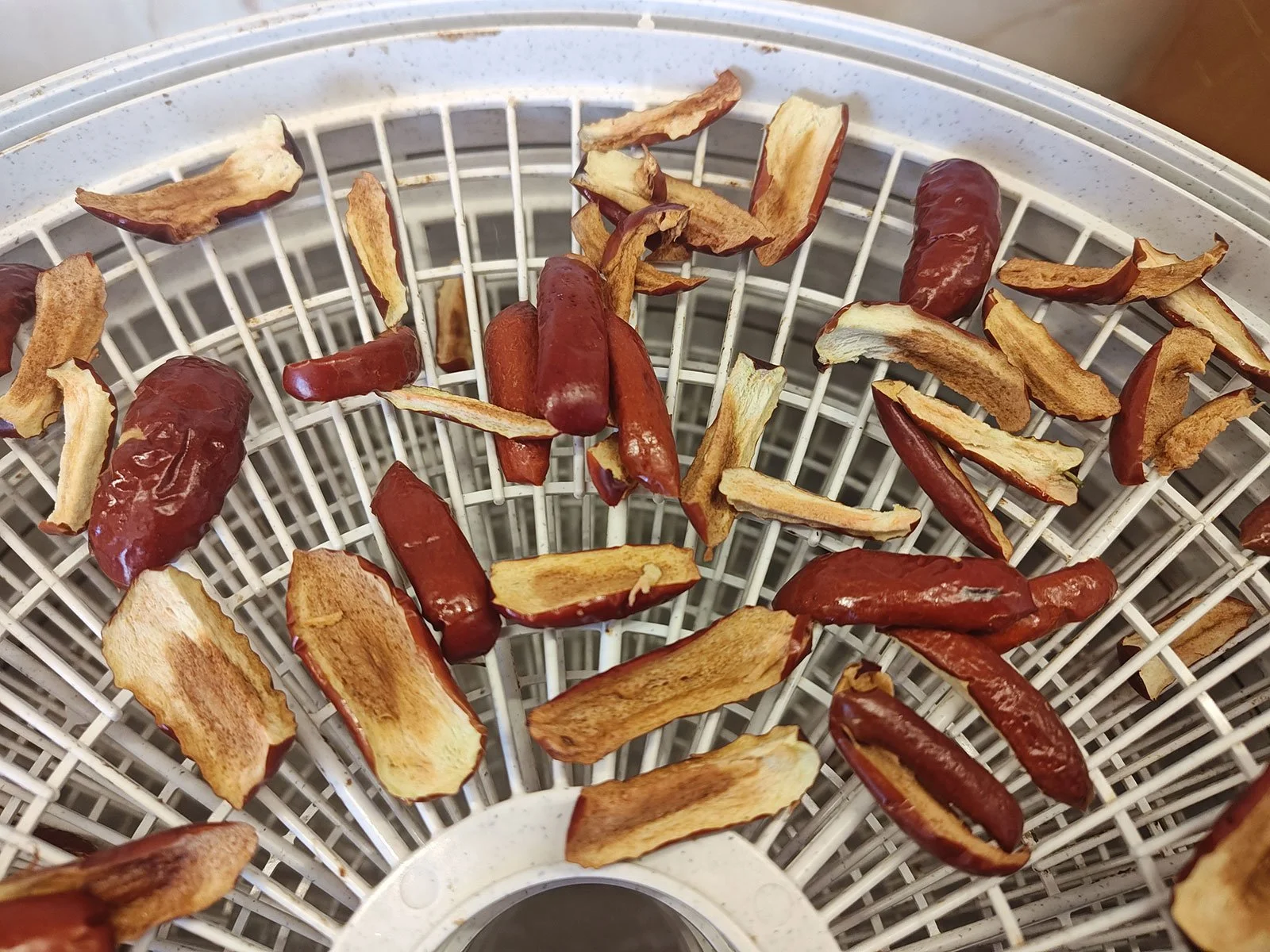
Jujubes with their pits removed and dried in a dehydrator, my preferred method for faster and more consistent drying.
The jujube fruit dries faster and more evenly if it is separated from the pit.
Sun Drying (Traditional): Place on a tray in a sunny, well-ventilated spot. Cover lightly with cheesecloth. Turn occasionally for even drying (7-10 days).
Oven Drying (Low and Slow): Pre-heat oven to lowest temperature (usually 170°F / 77°C) then turn off. Keep the oven door slightly open and dry 10-18 hours. Reheat the oven as needed and turn off to avoid overheating above 135°F / 57°C. This lower drying temperature helps preserve texture and nutrients.
Dehydrator: Set at 135°F / 57°C, dry 5–10 hours until firm and wrinkled.
Storage: Cool completely. Store in airtight containers in a cool, dark place. Theoretically, dried jujubes can last up to a year. I can’t attest to this personally — the longest I’ve been able to ration jujubes has been a few months because they’re such a favorite to enjoy in fall and early winter.
Other Ways to Enjoy Jujubes
The sharp jujube pits can be cracked open (I use large wire cutters) to reveal one or two seeds. I’ve made a pleasant-tasting tea from these seeds, though I’m unsure the tea is worth the effort, and there doesn’t seem to be much documentation of people using seeds from this species. Ziziphus jujuba seeds have much less potency than the seeds from Ziziphus spinosa, which are a prized botanical in TCM.
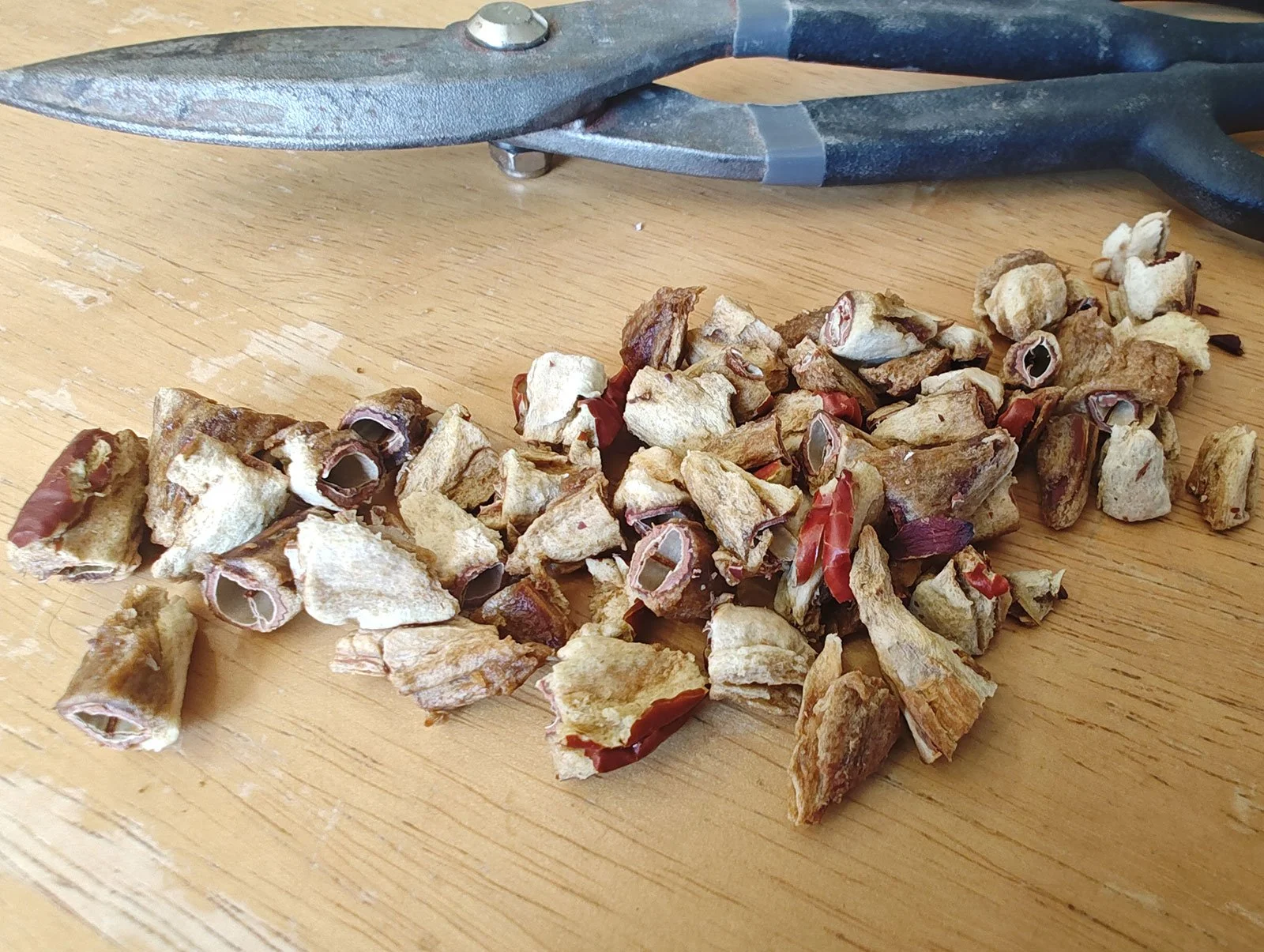
Jujube pits cracked open with a wire cutter.
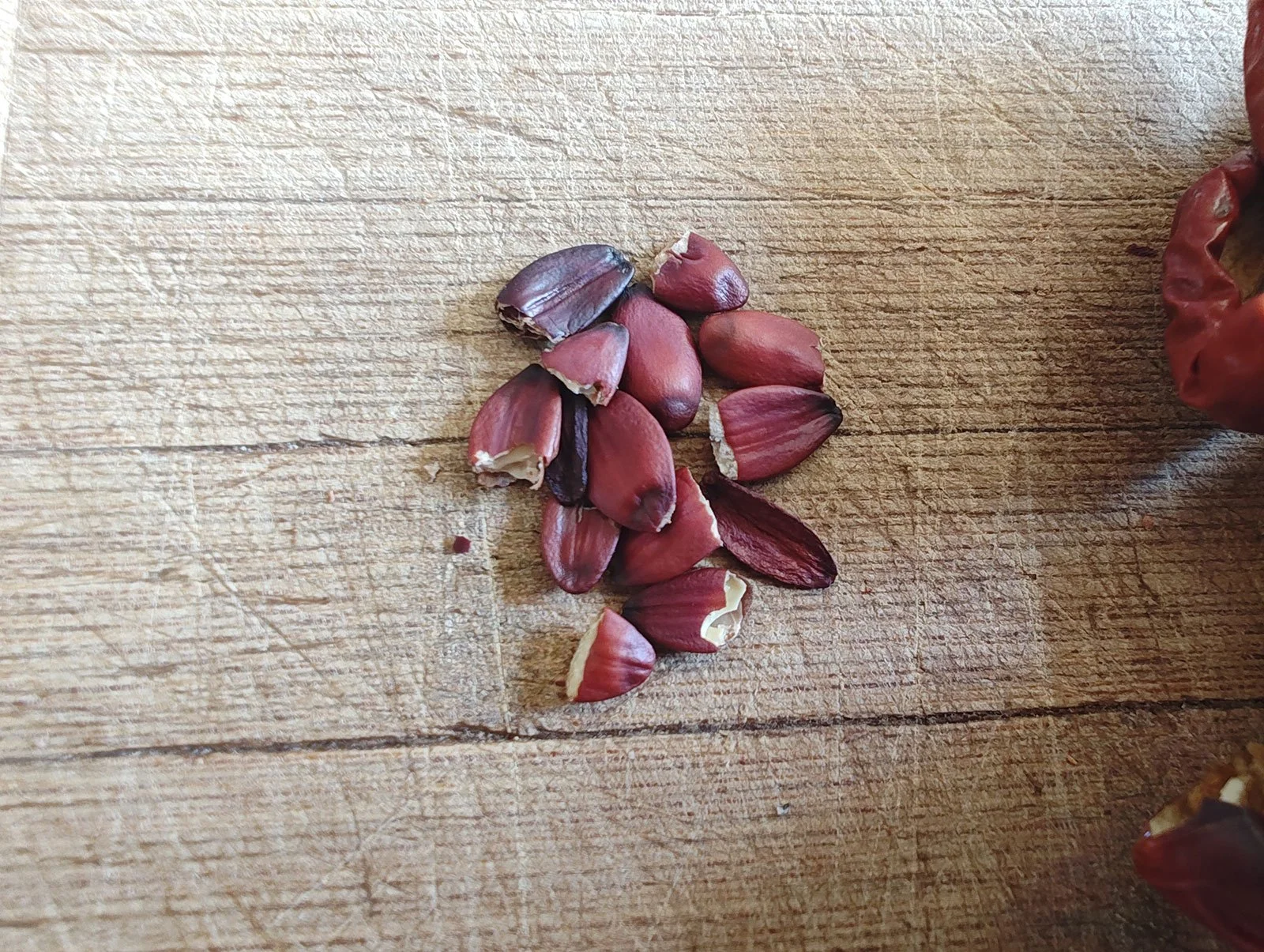
Ziziphus jujuba seeds ready to make into a pleasant tea. Traditionally, another species of jujube has its seeds used for tea in TCM.
Learn More
This podcast interview is a great place to learn more about jujubes.